
The 7 deadly sins of greenwashing

These days, it seems like everything is greenwashing.
This is happening because many companies have dived headfirst into this «green fad» without actually enacting meaningful action. We are surrounded by professional environmental fraudsters.
Add to this the fact that consumers are becoming more and more informed and that, putting it bluntly, we are not stupid, and thus we are able to spot these attempts at environmental posturing, which in turn only leads to (even more) mistrust.
This is a serious issue. Not only for the companies doing it, which are putting their reputation at risk, but also for those companies that want to do things right and face the lack of credibility that is automatically associated with acronyms such as Ltd., Plc., etc.
And so, today I will tell you what the 7 deadly sins associated with greenwashing are. If you manage to steer away from them, you will be able to carry out proper sustainability marketing without being accused of anything.
#1 Hidden agenda
A product is promoted as green or eco based on a limited number of features without paying attention to other relevant environmental aspects.
This mistake is often the result of ignorance, but there are also those who take advantage of the consumer’s lack of knowledge.
For instance, many cardboard cups from coffee machines claim to be recyclable, but the reality is that in Spain, given the way our recycling system works, they will actually never be recycled, since the plastic that makes them waterproof cannot be removed and the fact that: dirty paper and cardboard cannot be recycled!
#2 Lack of proof
Our environmental claims are not backed up by data, evidence or third party certification.
Now, this doesn’t mean that you have to rush to get everything certified. But you do have to be able to, and capable of, providing truthful and credible information to whoever asks you for it (even better if t’s all clearly laid out on your website, for example, so they don’t have to ask you for it in the first place).
#3 Vagueness
Do you use unspecific words, which can have a lot of different meanings and lend your product or service an aura of sustainability? You are falling into the third sin.
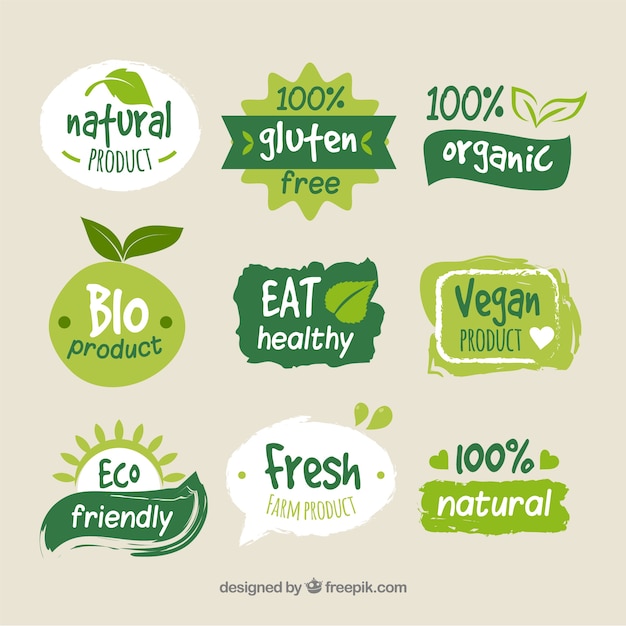
For example, a 100% natural product does not necessarily have to be sustainable. The coltan in your cell phone is 100% natural and its extraction is not very sustainable.
#4 Worshipping false labels
Beware of those labels that appear to be certified by a third party and which are actually created «ad hoc» by the company itself or by the companies in the group to give themselves environmental self-glorification.
Several such labels can be found on cleaning products, just so you know 😉 And the only thing they accomplish is misleading the consumer even more for a change.
#5 Irrelevance
Stop making a big fuss about that one tiny green or sustainable thing your company has or does when everything else isn’t sustainable.
Good environmental marketing should talk about significant impacts and aspects of your business, not about your fabulous vegetarian menu for employees, all while polluting lakes on the other side of the planet.
#6 The lesser evil
This is when sustainability features are added to products that are not sustainable themselves, or that are in fact totally irrelevant to the product itself.
Want an example? Want an example? That gigantic but recyclable packaging for a product that doesn’t need to be packaged in the first place.

#7 Lying
Last but not least. There are those who lie through their teeth. They falsify data, make up statistics, skew the information to their own benefit….
I am sure you can name more than one example of this
If you want to know more about greenwashing, how to make a good sustainability communication and develop your sustainable business I take this opportunity to invite you to the workshop (it’s free!) that I will give this February 20th in the morning at the Chamber of Commerce of Gijón.