

Circular economy is here to stay. Our fully linear, throwaway economic model is becoming obsolete and we need to create sustainable, resilient businesses that add value from both an environmental and social perspective.
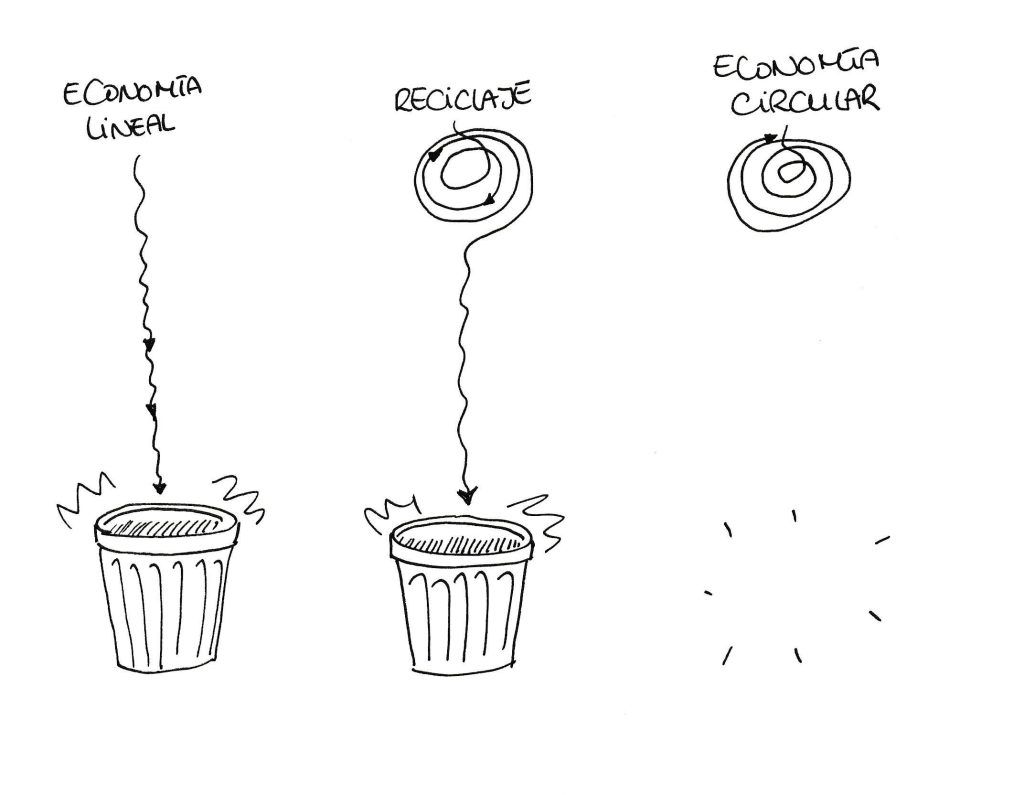
Transitioning from that linear model to a circular one requires a transformation process that is greatly simplified when our business is already circular from the get-go.
That’s why I’m bringing you nine business model ideas for you to choose the most suitable one for whatever entrepreneurship venture you have in mind.
Reparation
Nothing new to be told here.
One of the cornerstones of a circular economy is the greater durability of products. This can be achieved through eco-design, but also by taking into account the possibility of repairs.
The existence of repair companies is well known, but they have clearly been gradually disappearing, remaining almost exclusively reserved for large household appliances or some electronic devices that we find a little bothersome having to buy.
Perhaps it is time to broaden our scope once again and make room for other types of products, not necessarily electronic, that allow us to prolong the useful life of our purchases.
A quick tip: if there is a repair café in your city or region, go there and take a look around to get an idea of what your future customers will need.
Remanufacturing
This term may not ring a bell. Don’t worry, let me explain:
Remanufacturing is the process of restoring a product or component into one that has at least the same functionality and quality as the original did. It’s not far off from reparation, with the difference that the remanufactured product does not have to be returned to the original purchaser, instead being given a second life.
This process naturally requires much less energy, water and raw materials than creating a new product from scratch and, furthermore, it also makes it easier to obtain quality products at more affordable prices.
An advantage this type of business holds over others is that it builds greater customer loyalty by maintaining a much closer relationship with the customer.
Do you want to listen to it instead of reading it? Here it is in podcast format:
Reselling
This model entails the use of the same good over and over again.
The resale of products, above all in the textile sector, is steadily picking up, although it is not the only field in which this model can work out. The same can be done with books for one: the bookshop in question sells a book, the customer reads it and then sells it back to the shop. The shop puts it back on sale afterwards.
As you can see, reselling can be adapted to almost anything and it allows you to retain your customers and keep them coming back to your business.
Sharing platforms
Also going by the name of collaborative consumption, these platforms use technology to increase the use of all kinds of goods. In them, the owner offers other users the right to use what he or she owns (and probably has rotting in the storeroom) in exchange for financial compensation.
The tricky part of this business model is not in its technological base but in managing to monetise it adequately. Nonetheless, it’s grown enormously in the last few years. If you’re itching to see an example, just click here!
Product as a service (servitization)
Very similar to the previous one, the difference here lies in that it is the brand or manufacturer that offers its customers the possibility of paying for using the product instead of buying it.
The user is no longer the owner but instead «rents» the product in question.
This is probably one of the models that’s standing out the most, especially with products that are used on an occasional basis and whose acquisition would imply a fairly high cost, such as vehicles, machinery, tools…
In terms of sustainability, one of its advantages is that it indirectly promotes a more efficient and responsible use and consumption of the products. To take cars as an example, it is more likely that a person who owns one will use it for journeys where it wouldn’t really be necessary just because it’s convenient, whereas if you had to rent it temporarily, you would think twice about whether it’s worth it or not.
Waste as a resource
Although this model finds it difficult to thrive in Spain, due to the complexity of waste legislation and everything related to by-products, this is not the case in many other places.
We can opt for different options within this model.
On the one hand, we have the option of using the waste of others as a source of energy or as raw material for our product, or as part of one of our processes. The other option is to design our business in such a way that our waste can be made use of by others.
Whatever you choose, the result is crystal clear: less waste going to landfills and better utilization of resources. Doesn’t sound half bad, does it?
Resource recovery
In one of my first posts on the circular economy, I had already argued that it was becoming more profitable to obtain certain materials from waste than straight from traditional mining.
This has not changed. If anything, it is now even more profitable.
The scarcity of materials, especially those used in electrical and electronic devices, is not a trivial matter. This, together with the problems associated with legal landfills, such as the «spontaneous» landfills that our waste creates in other countries, make urban mining a model that has been under study for several years and which appears to be very promising.
Circular supplies
This model’s based on the provision of supplies that are fully renewable, recyclable or biodegradable and therefore help to maintain the circularity of consumption processes and systems.
Its value proposition lies in the substitution of fossil fuels or of critical or scarce materials.
The main objective of the circular economy is to get waste streams back into the supply chain as resources, thus closing the cycle. Many companies struggle to find suppliers that provide them with the necessary elements for their circular processes or products. Maybe the time has come for you to become one of them…
Extension of the useful life of products
Doesn’t it seem to you like everything breaks down too soon nowadays?
It’s time to design, or rather eco-design, for things to last.
That is the aim of this model. If your product is long-lasting and designed to maximise its useful life, you are already steering your business towards the circular economy.
It is important to keep in mind that extending the useful life of a product does not mean that it must last forever. Depending on the product, extending the life of a product beyond what is necessary can sometimes incur a higher consumption of resources than making a new one.
It is very likely that you will need to make some calculations based on a reliable life-cycle analysis, in order to know what the most appropriate lifespan of your product is so that its environmental benefits are maximized.
As you can see, there are many options when it comes to approaching your business model in a sustainable and circular way. At Paula Baldó we have been working for a long time to support entrepreneurs who want to be sustainable from the roots up, so if you also find yourself in this situation and want us to lend you a hand, don’t hesitate to ask us anything you need!